
Why Crawl Space Moisture Is a Serious Problem in the Conejo Valley
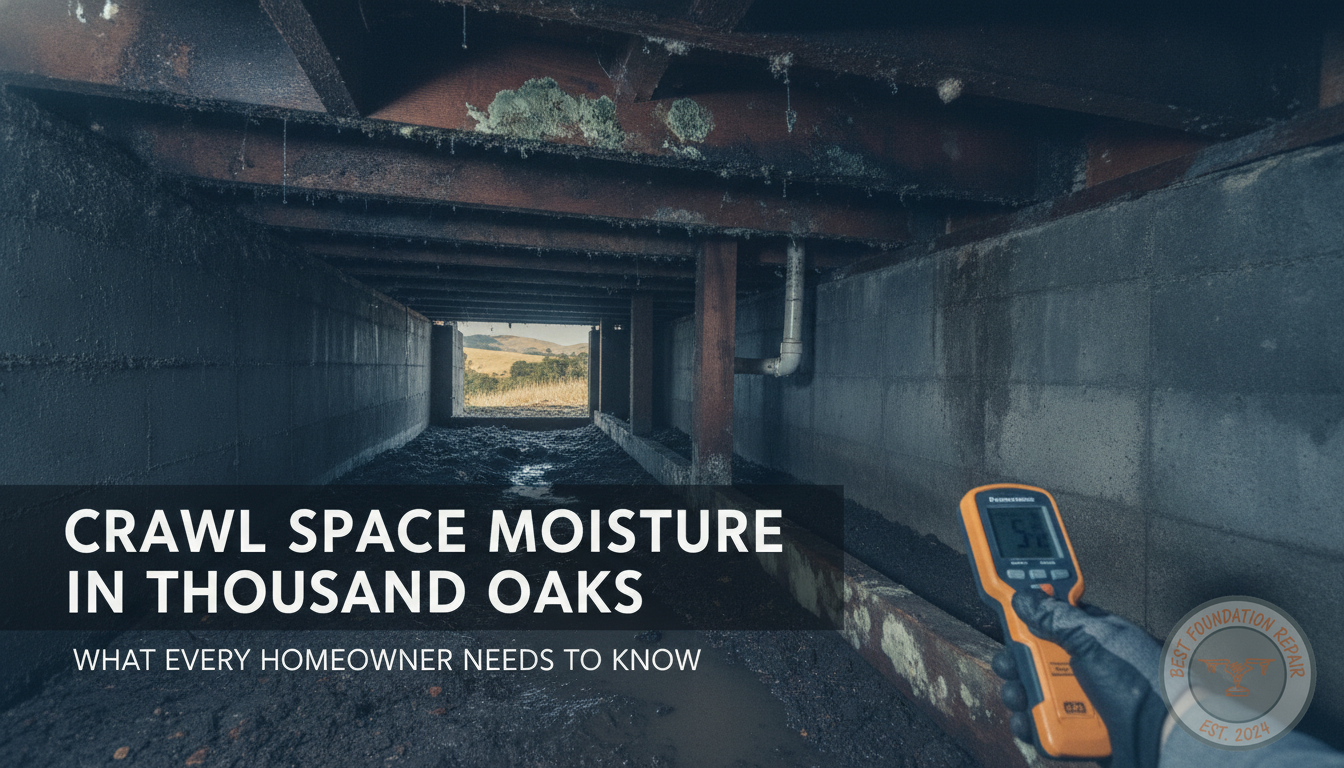
It's easy to ignore a space you never enter. But the crawl space beneath your Thousand Oaks home is doing critical work every day—supporting your floors, housing plumbing and HVAC runs, and separating your living environment from the soil below. When that space fills with moisture, it doesn't stay down there. Humidity migrates upward through a process called the stack effect, moving from the crawl space into your living areas and bringing mold spores, musty odors, and degraded air quality along with it.
The Conejo Valley's clay-heavy soils retain water long after rain events, and even during dry periods, ground moisture continues to evaporate upward. Properties in hillside neighborhoods like Lang Ranch face additional drainage challenges as water flows downhill and pools against stem walls. The result is that many Thousand Oaks homes with open dirt crawl spaces are experiencing ongoing moisture damage that their owners don't realize is happening.
How Moisture Enters Your Crawl Space
Understanding the entry points helps homeowners recognize when conditions are changing. The most common moisture pathways in Thousand Oaks crawl spaces include:
- Ground evaporation: Bare dirt floors release moisture vapor constantly, especially after rainfall saturates the clay soil beneath your home.
- Hydrostatic pressure: On sloped lots or after heavy rain, water in saturated soil can push through stem wall cracks, block joints, and vents.
- Inadequate or damaged vents: Older vent screens corrode and break, allowing rain splash, pests, and outdoor humid air to enter directly.
- Plumbing condensation or leaks: Supply lines sweating in summer or slow drain leaks add significant moisture load to the crawl space environment.
- Poor site drainage: Downspouts discharging near the foundation or negative lot grading that directs surface water toward the house concentrate moisture against the stem walls.
What Crawl Space Moisture Actually Damages
The structural consequences of chronic crawl space moisture are well-documented and genuinely serious. Wood is hygroscopic—it absorbs and releases moisture with the surrounding environment. When relative humidity in the crawl space stays above 70% for extended periods, wood-destroying fungi begin to grow and digest cellulose in your floor joists, subfloor sheathing, and wooden support posts.
Early-stage wood rot is white or brown discoloration and a softening of the wood surface. Advanced rot causes joists to crack longitudinally, lose load-bearing capacity, and eventually fail. The floors above become soft, springy, or visibly deflected. At that stage, the repair scope expands significantly—our crawl space repair and encapsulation service includes sistering damaged joists, replacing deteriorated posts, and installing adjustable steel support columns before installing the vapor barrier system, because encapsulating a structurally compromised space without addressing the structural damage first would be incomplete work.
Beyond structural damage, chronic crawl space moisture also:
- Creates ideal conditions for termites and other wood-destroying insects
- Promotes mold growth that degrades indoor air quality throughout the home
- Causes subfloor adhesive to fail, leading to squeaky or buckled hardwood floors above
- Increases HVAC energy consumption as the system works to dehumidify air rising from below
- Can create disclosure obligations when you eventually sell the property
The Encapsulation Solution: What It Is and How It Works
Crawl space encapsulation creates a controlled, sealed environment beneath your home by installing a continuous heavy-duty polyethylene vapor barrier across the ground floor, up the stem walls, and around every pier and column. The barrier—typically 12 to 20 mil reinforced material—is mechanically fastened to the walls and tape-sealed at every seam and penetration to create a true moisture boundary rather than a loosely laid sheet.
Our encapsulation process at Best Foundation Repair follows a specific sequence designed for Thousand Oaks conditions:
- Structural assessment first: We inspect every joist, post, and beam for rot, mold, and pest damage before any barrier goes in. Damaged structural members are repaired or replaced at this stage.
- Site prep and debris removal: We clear the crawl space of old vapor barrier material, debris, and standing water.
- Barrier installation: Heavy-duty liner is laid on the ground, lapped up the stem walls a minimum of 6 inches, and fastened with mechanical anchors and specialty tape at every seam.
- Ventilation management: Depending on your home's configuration, we either improve cross-ventilation or, where appropriate, convert to a conditioned crawl space model that eliminates humidity-driving outdoor air exchange entirely.
- Moisture management additions: Drainage matting, a sump pit, or a crawl space dehumidifier can be added for properties with active water intrusion or very high ambient humidity.
The finished result is a crawl space that maintains stable, low humidity regardless of what the soil or weather outside is doing—protecting your structural wood indefinitely.
Encapsulation Versus a Basic Vapor Barrier: Understanding the Difference
Many Thousand Oaks homes already have some form of plastic sheeting on the crawl space floor—often a thin, unsealed sheet installed during original construction. This basic vapor retarder is far less effective than a true encapsulation system. Without sealed seams, wall coverage, and proper fastening, moisture migrates through overlaps and edges freely. Encapsulation is a complete system, not just a floor covering.
If you've been told your crawl space "has a vapor barrier" and you're still experiencing musty odors or moisture problems, have the existing installation evaluated. A properly installed 20-mil encapsulation system that has been sealed at every joint and fastened to the walls provides a dramatically different level of protection.
Related Foundation Services That Work With Encapsulation
Crawl space encapsulation is most effective when it's part of a comprehensive approach to moisture management. If your property has drainage issues that are driving water against the foundation, those should be addressed at the same time. If foundation settlement has caused gaps or cracks in your stem walls, our foundation crack repair team seals those entry points before the barrier goes in. For properties with below-grade rooms or basements, our basement waterproofing service addresses the same moisture challenges in a different structural context.
If hillside drainage is part of your moisture problem, our retaining wall repair team can also evaluate whether grading and wall drainage improvements should be part of your overall plan. Homeowners in Westlake Village and the hillside sections of Thousand Oaks particularly benefit from this integrated approach.
Schedule Your Crawl Space Evaluation Today
The best time to address crawl space moisture is before it becomes structural damage. Best Foundation Repair provides thorough crawl space inspections for homeowners throughout Thousand Oaks and the Conejo Valley, with honest written assessments and repair recommendations scaled to your actual conditions—not upsells.
- Call (805) 666-6371 to schedule your inspection — open 7 days a week
Questions about foundation in Thousand Oaks, CA? We're happy to help — no sales pressure.
Talk to a Local Pro
Call +18056666371 or fill out our online form for a free, no-obligation quote.
Request Free Quote