
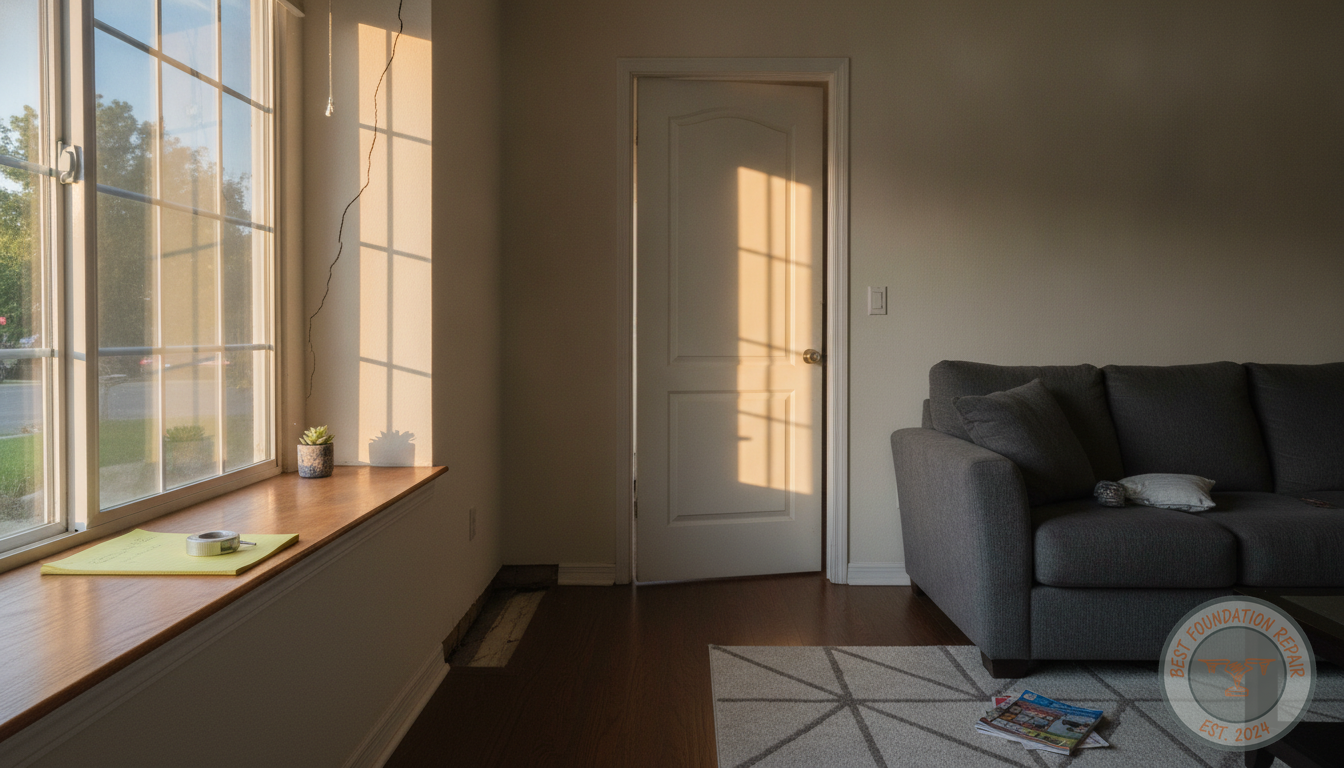
Why Thousand Oaks Foundations Are Vulnerable
Thousand Oaks sits on the Conejo Valley's complex geology, where expansive clay soils absorb winter rainfall and then shrink and crack during dry summers. That constant swelling-and-shrinking cycle exerts enormous pressure on concrete foundations, footings, and the structural wood above them. Hillside lots in neighborhoods like Lang Ranch add slope movement and drainage challenges on top of the soil issue. The result: foundation problems are more common here than homeowners often expect.
The good news is that most foundation issues are far more manageable—and far less expensive—when they are caught early. Here are the five warning signs you should never ignore.
1. Cracks in Your Foundation Walls or Slab
Not every crack is an emergency, but every crack deserves a professional look. Hairline vertical cracks are often normal concrete shrinkage, but cracks wider than a quarter-inch, horizontal cracks, or stair-step cracks running diagonally through block or brick are red flags for structural movement. Cracks that are actively growing—check by marking the end of a crack with a pencil and the date—require prompt evaluation.
Water can infiltrate even hairline cracks, accelerating deterioration and inviting mold and pests into your crawl space. Our foundation crack repair service uses epoxy injection, polyurethane foam, and carbon fiber staples to seal and stabilize cracks before they escalate. If you're in Westlake Village or central Thousand Oaks, our team can reach you quickly for an inspection.
2. Sloping or Bouncy Floors
Walk slowly from one end of a room to the other and pay attention to whether the floor tilts, dips, or feels springy underfoot. A slope of more than one inch over ten feet is considered significant. Springy floors often indicate damaged floor joists or support posts in the crawl space rather than the foundation slab itself.
Sloping floors are one of the clearest signs of differential foundation settlement—where one section of the foundation has sunk lower than another. In Thousand Oaks, expansive clay and hillside grading are the most common culprits. Our foundation settlement repair team installs steel push piers and helical piers driven past the unstable soil layer to stabilize the structure and, in many cases, recover lost elevation.
3. Doors and Windows That Stick or Won't Close Properly
When a foundation shifts, the structural frame above it racks out of square. Door frames that were once perfectly plumb become parallelograms, and suddenly a door that swung freely starts sticking at the top corner or dragging along the floor. The same thing happens with double-hung windows—they bind or no longer lock because the sashes no longer align.
This symptom is especially telling when it develops gradually and worsens over time, or when multiple doors and windows on the same side of the house are affected simultaneously. That pattern points to settlement occurring under a specific section of the foundation. Contact Best Foundation Repair at (805) 666-6371 if you notice this developing in your home.
4. Gaps Between Walls, Ceilings, or Exterior Trim
Look along the tops of interior walls where they meet the ceiling, around window and door headers, and at the corners of rooms. Gaps and separations in these areas—especially diagonal cracks in drywall running from the corners of window and door openings—are classic signs of differential settlement. Outside, watch for gaps forming between the exterior walls and trim boards, or between a chimney and the main structure.
If you notice these gaps combined with a chimney that appears to be leaning away from the house, that is a serious indicator of significant foundation movement that should be evaluated immediately. Our settlement repair services in Thousand Oaks address these symptoms at their structural root cause rather than patching over cosmetic evidence.
5. Musty Odors or Visible Moisture in the Crawl Space
Southern California's clay soils hold moisture long after rain events, and that ground moisture migrates upward into unsealed crawl spaces. If you notice a persistent musty or earthy smell in your home—especially in rooms closest to the ground floor—moisture is likely accumulating beneath your house. Left unchecked, that humidity causes wood rot in floor joists and beams, mold growth, and eventual structural deterioration that compromises the entire support system above.
Our crawl space repair and encapsulation service eliminates moisture at the source with heavy-duty vapor barriers, structural repairs, and where needed, sump and dehumidifier systems. Combined with our basement waterproofing solutions, we provide comprehensive moisture management for Thousand Oaks homes on every type of foundation.
What to Do When You Spot These Signs
If you recognize one or more of these warning signs at your Thousand Oaks property, the most important step is a professional inspection—not a DIY patch. Surface-applied fillers and store-bought crack sealants treat symptoms without addressing the underlying soil, drainage, or structural cause, and can actually hide the problem from future buyers or inspectors.
Best Foundation Repair provides thorough written assessments for homeowners throughout Thousand Oaks and the Conejo Valley, including Westlake Village and hillside communities like Lang Ranch. We explain what we find in plain language, give you repair options at different budget levels, and never pressure you into work you don't need.
- Call us at (805) 666-6371 — we're available Monday through Sunday, 8:00 AM to 6:00 PM
- Visit us at 75 E Thousand Oaks Blvd, Suite F, Thousand Oaks, CA 91360
- Email us at [email protected]
Early action on foundation warning signs is always the most cost-effective choice. Don't wait until a small crack becomes a structural crisis—schedule your inspection with Best Foundation Repair today.
Questions about foundation in Thousand Oaks, CA? We're happy to help — no sales pressure.
Talk to a Local Pro
Call +18056666371 or fill out our online form for a free, no-obligation quote.
Request Free Quote